Shopping Cart
Cart items
Shopping Cart
Cart items
Your Wishlist
Wishlist Items
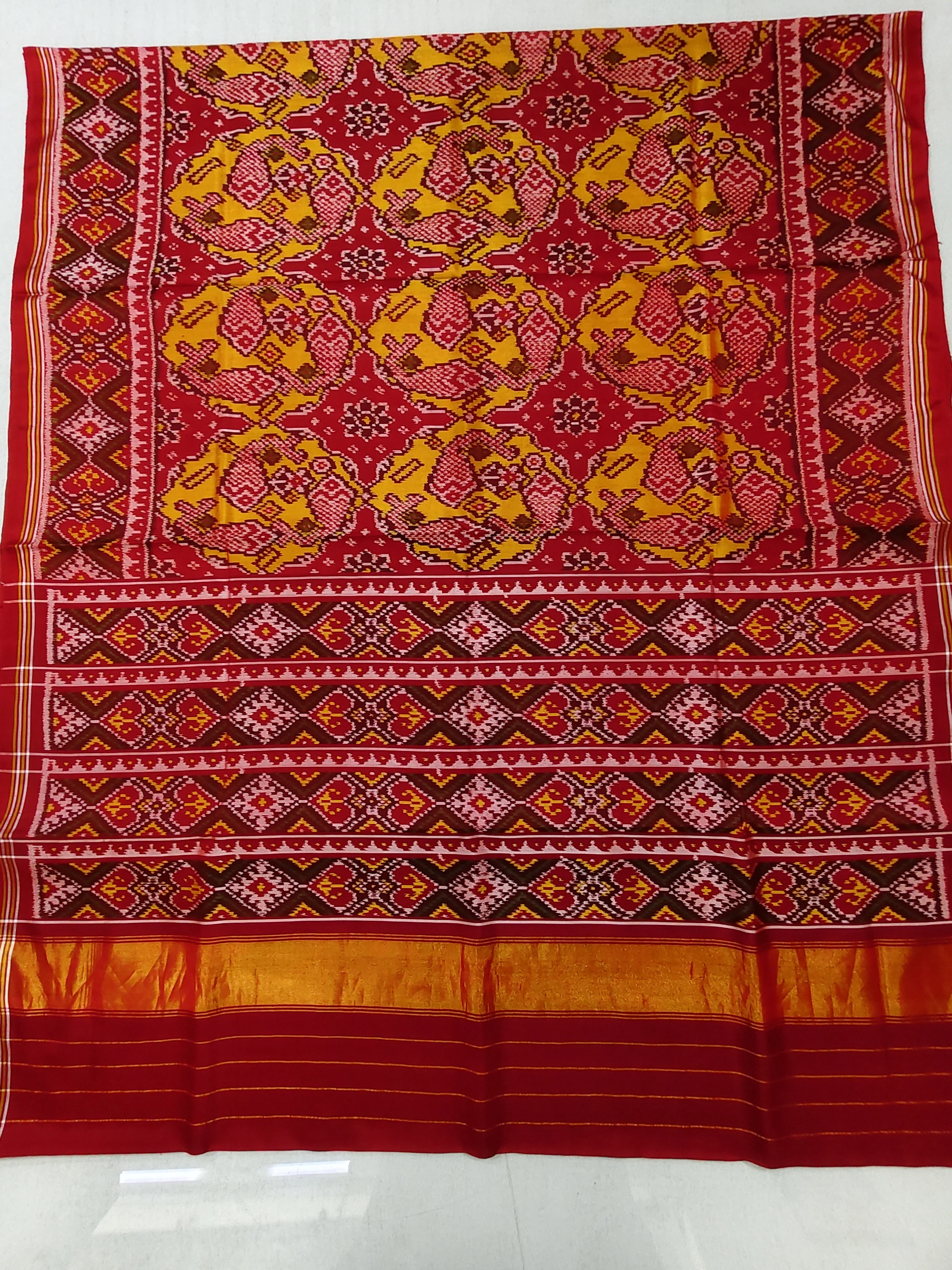
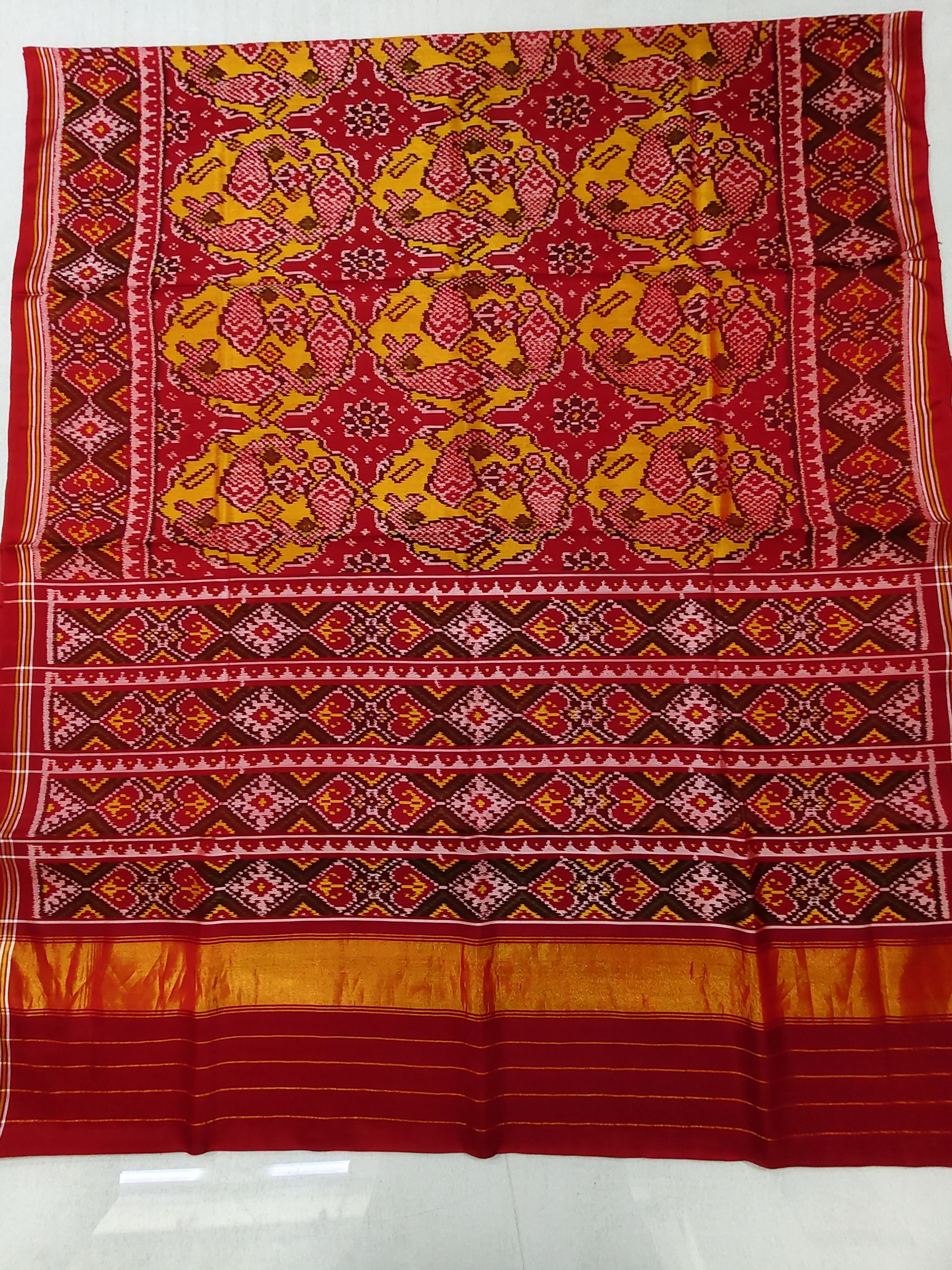
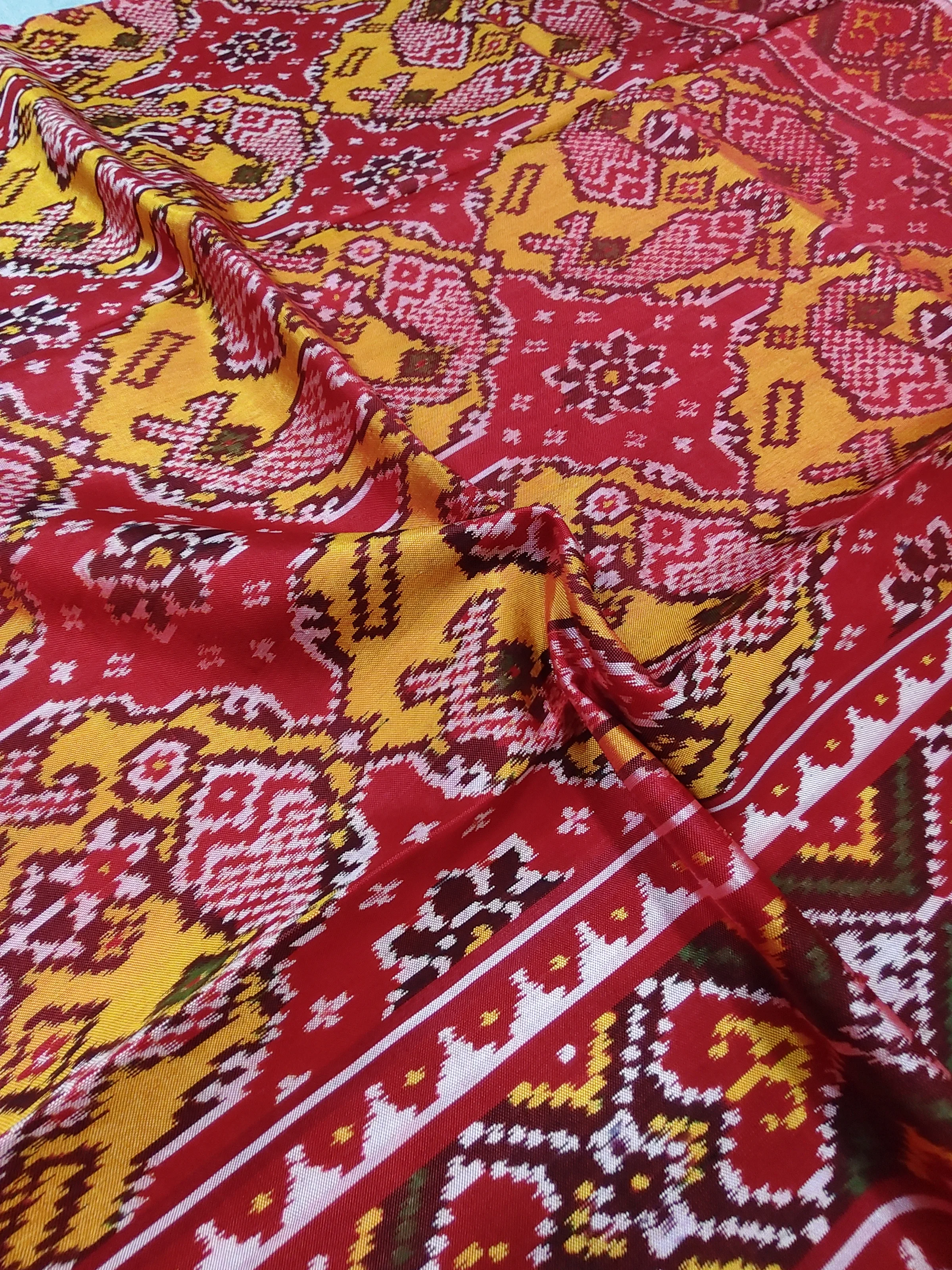
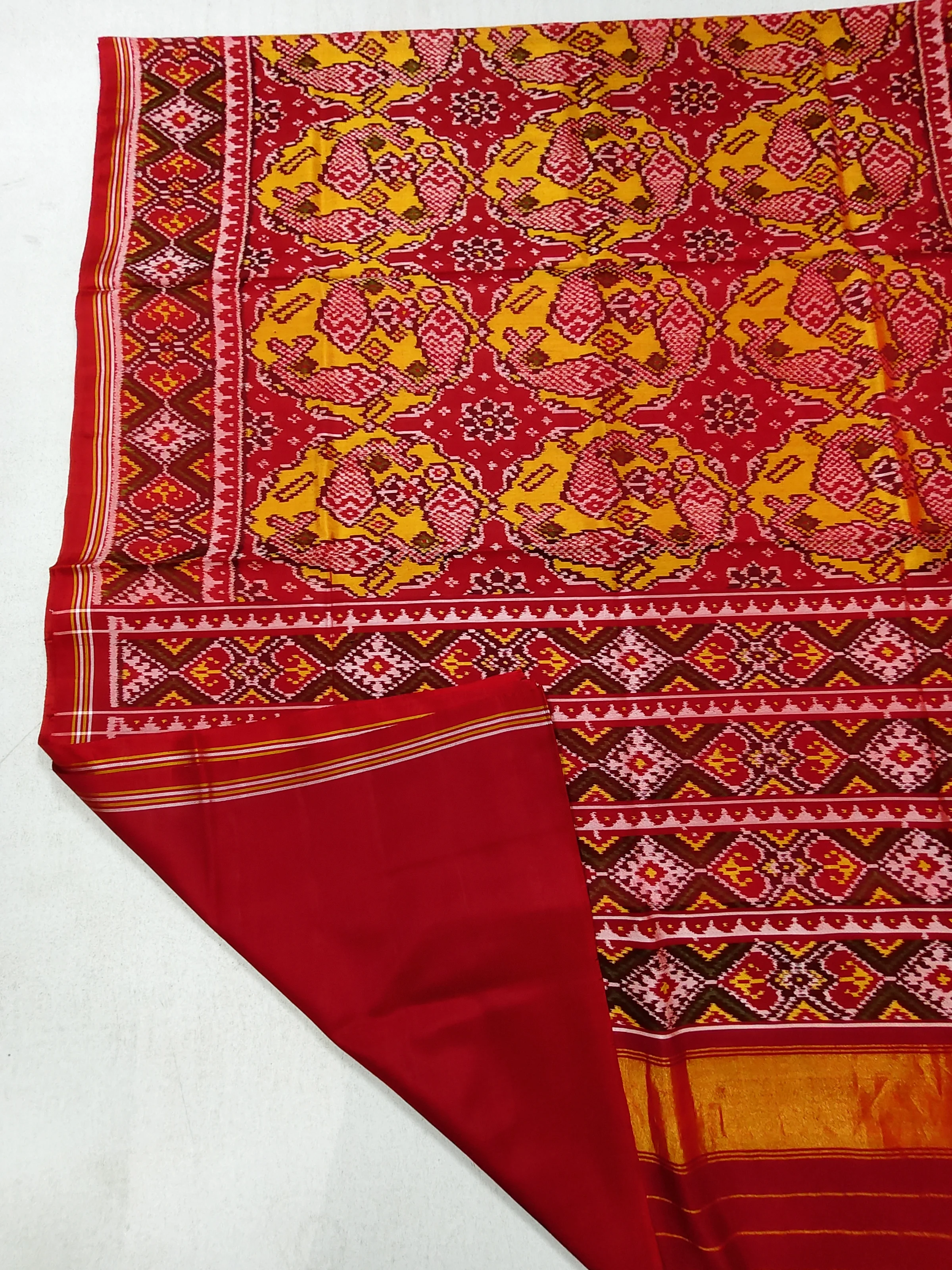
Single Ikat Patola Saree – 8 Ply Silk | Red | Selari Border | Machali Chabdi Mustard Motifs
A distinctive Single Ikat Patola saree crafted in premium 8 ply silk, featuring a bold red base, defined with a traditional Selari border, and detailed with unique Machali (fish) motifs arranged in Chabdi layout in mustard tone. The composition reflects strong cultural symbolism with structured traditional placement.
Woven using the single ikat technique, selected threads are resist-dyed before weaving begins, creating patterns with a natural, fluid character while maintaining alignment.
The 8 ply silk construction ensures durability, structure, and a rich hand-feel, making it suitable for long-term use and heirloom value.
Includes matching blouse piece, designed to complement the saree in colour and weave.
Cultural. Detailed. Traditional.
Designed for global buyers who value symbolic motifs, craftsmanship, and timeless Patola heritage.
Single Ikat Patola Saree – 8 Ply Silk | Red | Selari Border | Machali Chabdi Mustard Motifs
A distinctive Single Ikat Patola saree crafted in premium 8 ply silk, featuring a bold red base, defined with a traditional Selari border, and detailed with unique Machali (fish) motifs arranged in Chabdi layout in mustard tone. The composition reflects strong cultural symbolism with structured traditional placement.
Woven using the single ikat technique, selected threads are resist-dyed before weaving begins, creating patterns with a natural, fluid character while maintaining alignment.
The 8 ply silk construction ensures durability, structure, and a rich hand-feel, making it suitable for long-term use and heirloom value.
Includes matching blouse piece, designed to complement the saree in colour and weave.
Cultural. Detailed. Traditional.
Designed for global buyers who value symbolic motifs, craftsmanship, and timeless Patola heritage.

Since 1969, Aadesh Patola House has been preserving the timeless art of Single Ikat and Double Ikat Patola from Somasar, Gujarat. Every masterpiece is meticulously handcrafted in-house using pure silk by master artisans, carrying forward generations of authentic craftsmanship, heritage, and timeless elegance. Trusted by collectors and families across the world, every thread reflects the true legacy of India's finest handwoven textiles.